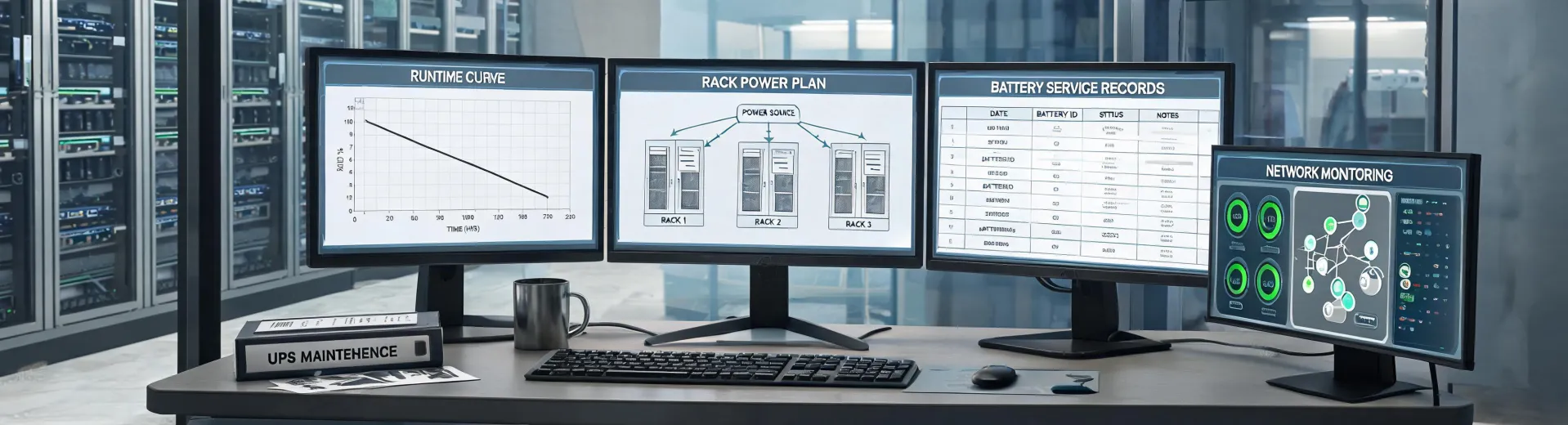
I am an office administrator for a 180-person company. I manage facilities and IT purchasing—roughly $220,000 annually across 14 vendors. I report to operations and finance. In 2021, I took over the power protection category after our previous admin retired. The first purchase I approved was an apc ups bx1500m. It looked simple: 1500VA, ten outlets, a recognizable brand, and a price that fit the budget. That unit is still running. But the way we bought it was almost a costly mistake.
The surface problem: everyone shops by VA and price
When you search Apc Ups, the results push you toward model numbers and VA ratings. BX1500M. BR1500MS. Smart-UPS. Back-UPS. The comparisons look clean: more VA equals more power, higher price equals better protection. I believed that too.
Then I looked at the apc ups bx1500m spec sheet more carefully. The VA rating and the watt rating are not the same number. VA is apparent power. Watts are real power. If you plug in motors, laser printers, or a server with a cheap power supply, the gap matters. I had been treating 1500VA as if it meant 1500 watts. It does not. That was the surface problem: I thought I was buying capacity. I was actually buying a compatibility promise that I had not verified.
The deeper issue: UPS buying is systems buying
Here is what I missed, and what most quote-based comparisons miss. A UPS is not a battery in a box. It is a small power system. That system includes the battery, the charger, the transfer switch, the outlets, the software, the warranty process, and the vendor behind it. If any one piece is wrong, the whole thing is wrong.
Battery charger specifications are not fine print
This is where the real difference shows up. Battery charger specifications tell you how fast the UPS can recover after an outage. They include charging current, recharge time, battery chemistry, float voltage, temperature compensation, and whether the charger is smart enough to avoid cooking the battery.
I learned this the hard way in 2022. We had a small closet UPS that kept beeping after short brownouts. The unit was not undersized for the load. The charger was slow. Every time the power flickered, the battery drained a little more, and the recharge cycle could not keep up. After 18 months, the battery was done. We spent about $1,900 on emergency replacement, overtime, and a Saturday morning I will never get back.
Cheap UPS units often hide weak charger specs. Premium units publish them. If a vendor cannot give you a charger spec sheet, that is a red flag. Trust me on this one.
Management software turns an outage into an alert
APC UPS management software is not a nice-to-have for every installation. In a server room, it is the difference between a controlled shutdown and a corrupted database. The UPS can only protect what it can talk to. If the software cannot send alerts, trigger shutdown, or log power events, you are relying on someone being in the building when the lights go out.
We configured APC PowerChute on our main rack in 2023. During a 47-minute outage that October, it shut down two virtual hosts cleanly and emailed the on-call tech. No data loss. No 3am rebuild. There is something satisfying about that kind of boring outcome. After years of hoping, we finally had a repeatable process.
The TCO math no one shows you
I now calculate total cost of ownership before comparing any vendor quotes. The sticker price is the smallest part. TCO includes:
- Unit price and shipping
- Battery replacement cycle and disposal
- Management card or software license
- Installation labor and rack space
- Downtime risk, even a short one
- Finance and invoice admin time
- Warranty and RMA friction
I once compared a $499 UPS against a $650 kit that included a network management card and a longer warranty. The $499 unit looked like the no-brainer. Then I added the card, the extra battery shipping, and the labor to install it later. The $650 kit was actually cheaper. The bottom line: the lowest unit price is usually not the lowest total cost.
The cost of getting it wrong
The costs do not stay in the procurement spreadsheet. They hit operations, finance, and your credibility.
In my first year managing vendors, I made the classic rookie mistake: I approved a purchase without verifying invoicing capability. The vendor offered a great price on replacement batteries. They sent a handwritten receipt. Finance rejected the expense report. I ate $2,400 out of the department budget. That mistake changed how I buy everything, including apc ups units and replacement batteries. Now I verify invoicing, warranty terms, and RMA process before placing any order.
The same pattern shows up in adjacent categories. If you are sourcing PV inverter private label, the unit price is not the project cost. You need certifications, firmware update paths, warranty support, spare parts, and whether the factory can keep the same bill of materials next year. If you are figuring out how to choose oil filter for wholesale, the cheap pallet is not the cheap decision. You need filtration ratings, burst pressure, anti-drainback specs, counterfeit risk, return policy, and traceability. Different products, same TCO logic.
What changed my mind
Everything I had read about UPS buying said to size by VA. In practice, I found that VA is only the beginning. The details that mattered were watt load, runtime at that load, battery charger specifications, software compatibility, and vendor support.
When I compared our old cheap UPS against the APC unit with management software side by side, I finally understood why the spec sheet matters more than the logo. The old unit protected hardware. The APC unit protected the business process. That is a different job.
The solution: a five-part TCO checklist
This is the checklist I use now. It is not fancy. It works.
- Load audit: Add up watts, not just VA. Leave headroom. Check startup surge for motors and laser printers.
- Runtime at real load: Ignore the marketing runtime. Find runtime at your actual watt draw, not at half load.
- Battery charger specifications: Ask for recharge time, charging current, battery chemistry, and replacement battery part numbers.
- Management and shutdown: Confirm APC UPS software support, network card options, alerting, and graceful shutdown for your operating systems.
- Vendor verification: Check invoice capability, warranty terms, RMA process, and whether they can supply replacement batteries for at least five years.
For apc ups bx1500m, that means reading the published APC spec sheet, not the retailer bullet points. For PV inverter private label, it means auditing the factory, not just the sample. For how to choose oil filter for wholesale, it means testing a sample lot and verifying the supply chain before you commit to a pallet.
Per FTC advertising guidelines (ftc.gov), vendor claims must be truthful, not misleading, and substantiated with evidence. If a supplier claims industrial-grade battery charger specifications or OEM-ready PV inverter private label capacity, ask for the test data. As of January 2025, verify current guidance at ftc.gov. The FTC Green Guides also require environmental claims like recyclable to be substantiated.
Bottom line
APC UPS makes reliable equipment. I still specify APC for our critical racks. But the brand is not the strategy. The strategy is TCO: watts, runtime, charger specs, software, support, and invoice discipline. Get those right, and the model number becomes a detail. Get them wrong, and the cheapest quote becomes the most expensive project. That is it.

Elaine Zhou
Elaine Zhou is a cable-management and connectivity analyst specializing in cable trays, cable glands, ties, conductors, terminations, plugs, sockets, and outlet connections. She applies IEC 61537 tray tests, IEC 62444 gland requirements, and IEC 60364-5-52 wiring criteria while examining safe current capacity, voltage drop, bend radius, segregation, grounding, sealing range, and enclosure entry. She helps contractors and engineers choose coordinated routes and connections for environmental exposure, expansion capacity, installation labor, reliability, and maintenance access.