The problem I thought I had
I am the office administrator for a 180-person company. I manage facilities and IT peripherals ordering - roughly $260k annually across 12 vendors. I report to operations and finance. In Q3 2024, I had to replace 18 desktop UPS units across three offices and source 120 USB-C chargers for hybrid work kits. I also sat in on a small rooftop solar backup project because facilities asked me to review the inverter paperwork. I thought my job was simple: compare VA ratings, get three quotes, pick the lowest price that arrived on time.
The quotes came back with a 32% spread for what looked like the same 1500VA APC UPS class. One vendor offered 'compatible' chargers at half the price. A PV inverter manufacturer sent a one-page spec sheet with efficiency numbers and no grid-code section. I almost approved the cheapest bundle. Almost.
That is the surface problem. Buyers think sourcing power equipment is a price and VA exercise. It is not.
The deeper problem: you are not buying a box
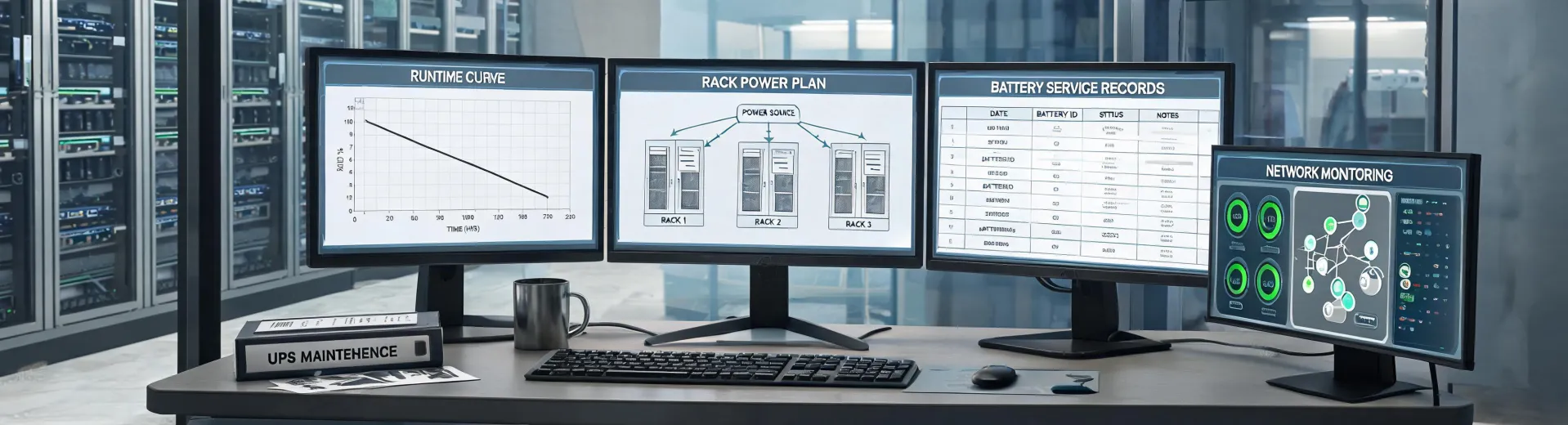
An APC UPS is not just a battery in a metal case. It is a load calculation, a runtime curve, a battery replacement cycle, a warranty path, and - critically - software. APC UPS management software (PowerChute in many APC deployments) is what tells you the battery is degrading, the load is creeping up, or the unit switched to battery at 2:17 a.m. Without that layer, a UPS can keep the server alive for 12 minutes and then let it crash anyway because no one configured a graceful shutdown.
According to APC by Schneider Electric (apc.com), UPS management software is used to monitor UPS status, battery health, and power events, and to automate shutdown during extended outages. That sounds basic. It is also the difference between a controlled shutdown and a corrupted database.
Then there is charger sourcing. I used to think a USB-C charger was a commodity. It is not. The cable, the Power Delivery negotiation, the plug types, the safety certifications, and the invoice documentation all matter. According to USB Implementers Forum (usb.org), USB Power Delivery specifications define negotiated power levels between devices and chargers. If you buy chargers that only 'sort of' follow the spec, you get slow charging, overheating, or devices that refuse to charge at all.
Solar inverter specifications have the same trap. A spec sheet may list peak efficiency at 97.6%, but that number means little if the MPPT range does not match your array, the grid-code certificate is missing, or the monitoring portal requires a subscription you did not budget for. When you evaluate PV inverter manufacturers, you are not just comparing watts and price. You are checking IEC 62109-1/-2 safety documentation, grid interconnection compliance where applicable, spare-part availability, and local support. If those boxes are blank, the low price is a loan against future downtime.
The surprising part? The expensive option was not always better. But the cheapest option was almost always more expensive after 18 months.
What it actually costs when you skip the boring checks
In my first year managing this category, I made the classic rookie mistake: I assumed 1500VA meant the same usable power and software support across vendors. I ordered 22 APC UPS units from a reseller because the price was $41 per unit lower. The units worked. The software did not. The management card firmware was two generations old, and the reseller could not provide a proper software license or invoice. Finance rejected the expense report. We spent $1,100 in staff time and a $600 redo to return and replace half the order. I ate the overtime budget.
The lesson was not 'never buy from resellers.' The lesson was 'verify before the PO.'
Charger sourcing gave me a second scar. In 2023, I approved a batch of laptop chargers for a hybrid-work rollout. They had the right wattage and the right plug. They did not have the safety certification documents our insurer wanted. The shipment sat in receiving for 19 days while we chased paperwork. The project missed its deadline. The chargers were not the problem. The missing documents were.
Solar inverter specifications cost a colleague more. She reviewed three PV inverter manufacturers for a small commercial install. One had a beautiful efficiency curve and a terrible support model. The inverter failed in month 14. The manufacturer had no local service partner. Replacement took six weeks. The tenant lost a refrigeration load for two days. The savings on the inverter were about $1,800. The spoilage and emergency rental power cost over $9,000.
That is the hidden math: procurement price is a small part of total cost of ownership. Battery replacements, software renewals, certification delays, service calls, and downtime all land somewhere. Usually on the admin who signed the PO.
The check I use now (and wish I had in 2020)
I built a 12-point checklist that takes about 15 minutes per vendor. It is not glamorous. It works.
- Confirm the real load, not the nameplate VA. Ask for runtime at your actual wattage.
- Verify APC UPS management software compatibility: agent OS support, shutdown automation, alerting, and license terms.
- Check replacement battery availability and current price. If the battery is proprietary and backordered, walk.
- For charger sourcing, require safety certifications, PD protocol support, cable rating, and plug-type documentation.
- For solar inverter specifications, match MPPT range to the array, check efficiency at realistic load, and request grid-code certificates.
- When you evaluate PV inverter manufacturers, ask for two local references from systems older than 24 months.
- Confirm warranty terms in writing: who pays labor, shipping, and diagnostics?
- Request a sample invoice and credit application before the first order.
- Test one unit on site. One. Before the full rollout.
- Document the software handoff to IT or facilities. A UPS without an owner is just a beeping box.
- Set a battery replacement calendar reminder at 36 months.
- Keep a one-page vendor scorecard: price, docs, support, lead time, returns.
Five minutes of verification beats five days of correction. The 12-point checklist I created after my third mistake has saved us an estimated $8,000 in potential rework.
For APC UPS deployments, I now treat the management software as a line item, not a bonus. I ask for the exact software version, the shutdown agent compatibility, and the notification path. For charger sourcing, I do not accept 'equivalent' without the spec sheet and certification file. For solar inverter specifications, I do not compare efficiency numbers until the grid-code and MPPT boxes are checked. And for how to evaluate PV inverter manufacturers, I use references and service response times, not just price per watt.
There is something satisfying about a PO that does not come back. After years of teeth-grinding, finally a process. Not perfect. But predictable.

Sarah Okonkwo
Sarah Okonkwo is an electrical test and measurement analyst specializing in multimeters, clamp meters, installation testers, sensors, and power-quality monitors. She uses IEC 61010-1 and IEC 61010-2-032 safety requirements for test and current-clamp equipment, then applies IEC 61000-4-30 methods to power-quality parameters while examining category ratings, accuracy, resolution, bandwidth, harmonics, voltage events, and uncertainty. She helps technicians and buyers select instruments, set up safe measurements, interpret readings, and diagnose faults within the intended circuit environment.