-
APC UPS FAQ for B2B Buyers
-
1. What should I look for in an APC UPS for critical backup?
-
2. How does the APC UPS Finder actually help?
-
3. OEM battery charger vs branded replacement: what's the difference?
-
4. What does UPS OEM really mean for B2B buyers?
-
5. Hybrid inverter wholesale cost guide: what drives pricing?
-
6. When is an APC UPS not the right fit?
-
7. How do I avoid emergency rush order mistakes?
-
8. What specs should I verify before ordering?
-
1. What should I look for in an APC UPS for critical backup?
APC UPS FAQ for B2B Buyers
I coordinate emergency power orders for a systems integrator. I've handled 120+ rush orders in eight years, including same-day turnarounds for healthcare and data center clients. When I'm triaging a rush UPS order, I care about three things: hours left, feasibility, and worst-case risk. This isn't a brochure. It's the answers I give when a buyer calls and says they need an APC UPS, an OEM battery charger, or a hybrid inverter wholesale cost guide before the end of the day.
Here are the questions that come up most often.
1. What should I look for in an APC UPS for critical backup?
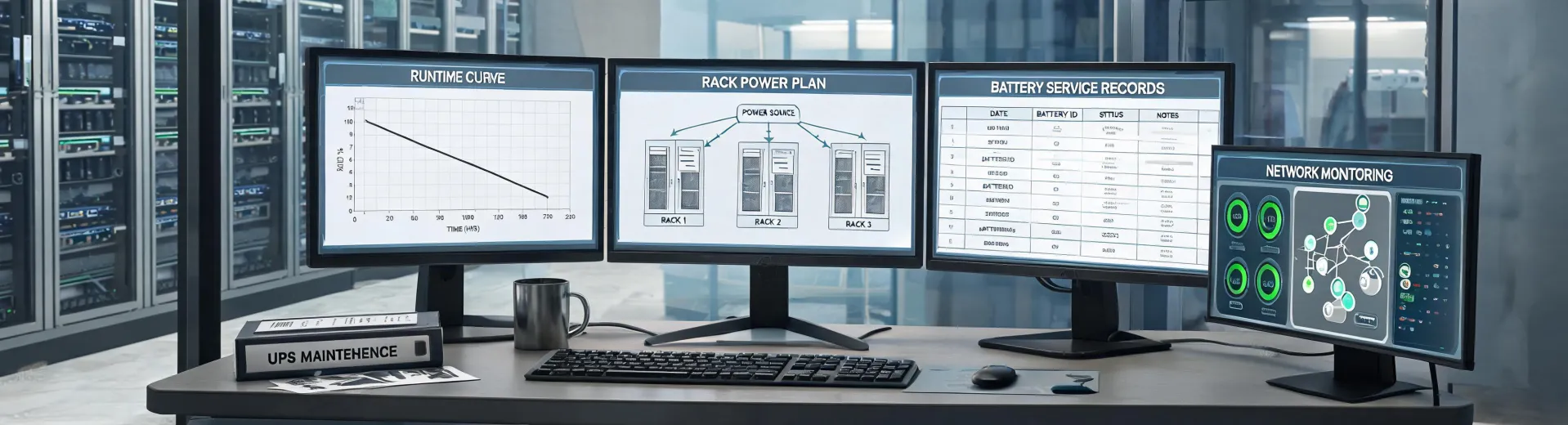
Start with load, runtime, and form factor—not model number. A 1500VA APC UPS might run a small server rack for 10 minutes, or it might run a single switch for 90 minutes. The model name doesn't tell you that. The runtime chart does.
According to APC by Schneider Electric (apc.com), as of 2025, APC publishes load-specific runtime curves for each UPS family. Use those curves. Then add 20-30% headroom for inrush current and future load. If you're buying for emergency systems, check NFPA 70 (NEC) Article 700 requirements for your jurisdiction. Emergency systems usually have stricter transfer, testing, and signage rules than ordinary IT backup.
The surprise for most buyers isn't the UPS price. It's the battery shipping and replacement logistics. If you don't have a battery maintenance plan, your runtime will shrink every year. IEEE 1188 is a good reference for VRLA battery maintenance and testing. Don't skip it.
2. How does the APC UPS Finder actually help?
The APC UPS Finder is a useful first filter. It asks for load, runtime, outlet type, and rack/tower preference. For a quick quote, it gets you into the right product family. But it can't know your site altitude, ambient temperature, harmonic profile, or how old your existing batteries are. Those variables can turn a 15-minute runtime into 6 minutes.
In my role coordinating rush orders, I use the APC UPS Finder as a starting point, then verify with a real runtime calculation. I'm not 100% sure why so many buyers treat it as a final answer, but I think it's because the interface looks definitive. It isn't. It's a selector, not a commissioning tool.
If you're an OEM or distributor, pair the Finder with your own load bank test. That's the difference between a spec sheet and a working system. And if you're sourcing battery charger OEM modules for a custom cabinet, the Finder won't help at all—you need a different design review.
3. OEM battery charger vs branded replacement: what's the difference?
People think OEM always means cheaper. Actually, OEM quality varies wildly. The causation often runs the other way: a charger that meets tighter tolerances and has better thermal design can command a higher OEM price. The 'OEM means cheap' thinking comes from an era when generic parts were mostly commodity. That's changed, especially for battery charger OEM modules used in UPS and hybrid systems.
For APC UPS replacement batteries, I usually recommend staying with APC-approved batteries unless you have a validated alternative. The UPS firmware expects certain charge profiles. A cheap charger can overcharge or undercharge, and you won't see the damage until the next outage.
If you're buying battery charger OEM units for your own product, ask for: charge curve documentation, temperature compensation, UL or equivalent safety listing, and failure-mode data. Don't hold me to this, but I'd budget more for the charger than for the enclosure. The enclosure doesn't cook your batteries.
4. What does UPS OEM really mean for B2B buyers?
UPS OEM is one of those terms that means three different things. It can mean white-label UPS units, OEM replacement batteries, or OEM battery charger modules. Before you request quotes, write down which one you need. Otherwise you'll get apples-to-oranges pricing.
APC's core business is branded UPS systems, replacement batteries, and management software—not generic OEM power boards. If you're looking for a private-label UPS, clarify whether the supplier is actually manufacturing or just rebadging. Ask for the original manufacturer's UL 1778 file number. Per UL 1778, UPS equipment is evaluated for safety, and that listing matters for insurance and code compliance.
When I'm triaging a UPS OEM inquiry, I ask: who owns the firmware, who handles warranty, and who stocks the replacement batteries? If the answers change after the PO, you're not buying OEM. You're buying risk.
5. Hybrid inverter wholesale cost guide: what drives pricing?
Take this with a grain of salt: there's no single hybrid inverter wholesale cost guide that fits every buyer. A 5kW hybrid inverter might quote at a few hundred dollars per unit in high MOQ, or low four figures with full certifications and extended warranty. The spread isn't random.
The biggest cost drivers are certification, MPPT count, battery voltage range, and firmware support. A hybrid inverter with UL 1741, IEEE 1547, and a real warranty package costs more than an uncertified box. More often than not, the cheap unit is cheap because the certification and support are thin.
Also separate hybrid inverter sourcing from APC UPS sourcing. APC is a UPS brand, not a hybrid inverter brand. If you need solar MPPT, battery charging from PV, and grid-tie hybrid functions, you're in a different product category. Don't force an APC UPS into that role. It won't do it.
6. When is an APC UPS not the right fit?
I recommend APC UPS for validated IT, healthcare, and light industrial backup where runtime, management software, and service network matter. If you're dealing with a 500kVA three-phase data center, a DIY off-grid solar system, or a lowest-cost commodity build, you might want to consider alternatives.
APC's single-phase range is typically strongest from 450VA to 5000VA. Above that, you're usually looking at modular or three-phase systems outside the standard APC UPS Finder path. For outdoor extreme-temperature sites, or for custom battery charger OEM designs, APC may not be the right fit either.
This isn't a defect. It's a boundary. The solution works for most standard B2B backup cases. Here's how to know if you're in the other group: if your load profile is non-linear, your environment is uncontrolled, or your volume is high enough to justify custom OEM, get a specialist involved before you buy.
7. How do I avoid emergency rush order mistakes?
In March 2024, a client called at 4:30 p.m. needing a rackmount APC UPS and replacement batteries for a clinic opening 36 hours later. Normal turnaround was five days. We found a distributor with stock, paid $700 extra in rush freight on top of the $4,200 base cost, and delivered with four hours to spare. The client's alternative was delaying the opening.
That worked because we verified three things before paying: serial-number-level stock, battery date codes, and freight cutoff. Most rush orders fail on one of those. People assume the warehouse has it because the website says 'in stock.' The website doesn't know the battery date code.
Our company policy now requires a 48-hour buffer for any APC UPS order tied to a go-live. We lost a contract in 2022 because we tried to save $300 on standard freight instead of rush. The UPS arrived Monday instead of Friday. That's when we implemented the buffer rule. Rush fees are usually worth it for deadline-critical projects, but only if you verify stock first.
8. What specs should I verify before ordering?
Before you order an APC UPS, OEM battery charger, or hybrid inverter, verify these: VA/W rating, input plug type, output receptacle type, runtime at your actual load, battery type and quantity, communication ports, and management software compatibility. If it's a UPS OEM deal, add firmware version, warranty owner, and spare-parts lead time.
For code compliance, check UL 1778 listing for UPS equipment and NFPA 70 (NEC) Article 700 if the load is life-safety. For battery maintenance, IEEE 1188 gives you a baseline. And verify current pricing and lead times directly with the manufacturer or authorized distributor, because rates and inventory change.
If you can't verify those items, don't sign the PO. A fast order doesn't matter if the unit doesn't fit the rack, doesn't run the load, or isn't legally installable.
That's the short version. No perfect answer, just the checks that keep a rush order from becoming an outage.

Rebecca Sloan
Rebecca Sloan is a power distribution and protection analyst specializing in circuit breakers, switchgear, contactors, fuses, surge protective devices, and coordination. She applies IEC 60947-2 breaker requirements, IEC 60269 fuse characteristics, and IEC 61643-11 tests while examining rated voltage, breaking capacity, time-current curves, selectivity, and prospective short-circuit current. She helps engineers and buyers compare protective devices against documented fault levels, installation conditions, maintenance access, and continuity priorities.