起因:一次客户演示,把便宜电源打回原形
I'm a procurement manager at a 240-person commercial integration company. I've managed our power protection budget—$180,000 annually—for six years. We buy UPS units for client-facing demo rooms, server closets, and field kits. Before March 2024, I treated UPS as a commodity. If it had enough VA and the price was right, it got on the truck. That was a mistake.
On March 14, 2024, we were doing a live demo for a manufacturing client. Their operations director was in the room. Our demo rack was plugged into an older UPS we'd bought years ago because it was 'good enough.' Mid-presentation, the lights flickered. The UPS clicked, beeped twice, and died. Screens went dark. The client didn't say much. He didn't have to. That look—polite but unconvinced—said more than any survey. We didn't lose the deal that day, but we lost the room. The follow-up email mentioned concerns about reliability. That's when I started thinking about total cost differently.
过程:从 apc ups vulnerability news 到固件盘点
A week later, I read an apc ups vulnerability news headline about network management card issues. I didn't panic. But it triggered a reverse validation moment: everyone told me to track firmware, and I only believed it after we found three UPS management cards two versions behind. We had no process. None. (note to self: never again.)
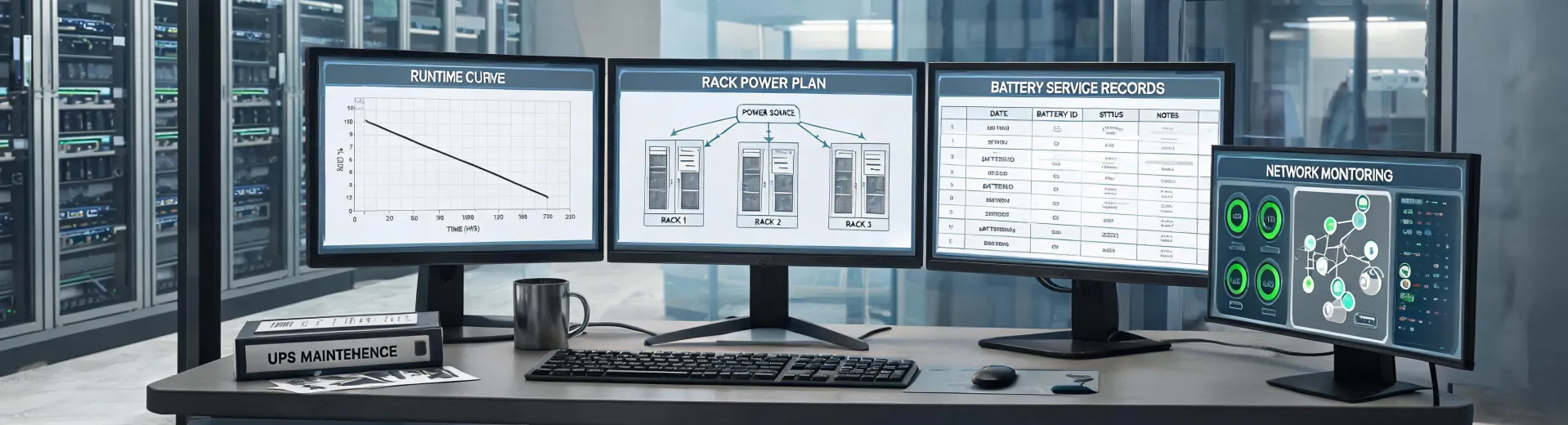
I pulled every UPS asset into a spreadsheet: model, age, battery date, firmware, connected load, and owner. Then I started looking at APC UPS because our integrators kept specifying it, and Schneider Electric's public documentation made specs easier to verify. I wasn't looking for the cheapest option. I was looking for fewer unknowns.
电池充电器采购、逆变器目录和锂电池 UPS 规格指南
That audit pushed me into categories I'd normally ignore. Battery charger sourcing became a real project: we needed replacement chargers for field kits and spare batteries for rackmount units. I built an inverter catalog comparison—not because we sell inverters, but because some clients ask for DC-to-AC backup for mobile trailers. And I finally read a lithium ups specification guide instead of skimming it.
The frustrating part: every vendor quoted a different all-in number. One battery charger sourcing quote looked 18% cheaper until I added freight, hazardous material handling, and a $75 per-unit disposal fee. (Which, honestly, felt excessive.) The cheap option wasn't cheap. It was just incomplete.
I have mixed feelings about lithium UPS. On one hand, the energy density and cycle life are impressive. On the other, the spec guide reads like a compliance exam: UL 1973 for battery modules, UL 9540 for energy storage systems, fire code clearances, thermal runaway mitigation. For a 2,000VA closet unit, lithium can be overkill. For a mobile trailer or high-density rack, it can be the right call. We now use a decision tree instead of a default.
转折:比较 APC UPS 型号和总成本
I compared eight vendors over three months using a TCO spreadsheet. We looked at APC UPS models—Smart-UPS 750VA, 1500VA, 2000VA, and 3000VA rackmount—plus replacement batteries and management software. Publicly listed U.S. prices in January 2025 put a Smart-UPS 1500VA around $300–$600, a 3000VA rackmount around $1,000–$1,800, and replacement batteries around $80–$250. But those numbers mean nothing without the rest.
My TCO columns: unit price, shipping, startup configuration, management card, software license if any, replacement battery cost over five years, battery disposal, remote monitoring labor, and downtime risk. That last column is subjective, but it's the one that matters.
One vendor pitched a cheaper UPS with no network card. Fine for a desktop, terrible for a remote server closet. Another quoted a lithium UPS specification guide that was impressive but required a fire-rated cabinet we didn't have. The APC quote wasn't the lowest line item. It was the lowest total surprise.
According to CISA and Schneider Electric security advisories, UPS network management cards have been targeted by vulnerabilities before. The lesson isn't 'avoid APC.' The lesson is 'treat every networked UPS as a patchable device.'
结果:客户感知回来了,预算也更稳了
We replaced the demo room UPS with an APC Smart-UPS 1500VA and added a management card. We standardized firmware checks quarterly. We moved field kits to sealed battery packs and documented battery charger sourcing specs so field techs couldn't buy random chargers. We also built a small inverter catalog for mobile trailers, with two approved models.
Six months later, we ran another live demo for the same manufacturing client. No outage. No drama. Their ops director didn't mention reliability—and that was the win. When the power protection works, clients notice the experience, not the equipment. That's the quality perception point: the output is the brand. A flickering screen says more about your company than a brochure ever will.
We also cut budget overruns. After tracking 42 orders over two years, I found that 31% of our power protection overruns came from hidden freight and battery disposal. We added a mandatory TCO template and cut overruns by about 22% the next year. That saved us a ton of follow-up and a few awkward budget meetings.
复盘:采购 APC UPS 时我会先看的五件事
- Load profile, not just VA. A 1500VA unit with a weak battery and no management card isn't the same as a managed 1500VA.
- Firmware owner. Someone has to own apc ups vulnerability news alerts, security bulletins, and patch schedules.
- Battery lifecycle. Replacement cost, disposal, and availability matter more than the first invoice.
- Spec guide literacy. If you're buying lithium UPS, read the lithium ups specification guide and check UL 1973, UL 9540, and local fire codes.
- Client-facing risk. For demo rooms, front desks, and customer-facing racks, quality is part of the brand. Budget options have a place—just not where clients see them.
I'm not saying every buyer needs APC UPS. I'm saying the cheapest quote is a story you tell yourself until the power drops. The better story is a spec sheet, a firmware log, and a TCO spreadsheet that includes the stuff nobody puts on the first page. (Mental note: update the spreadsheet quarterly.)

Mateo Alvarez
Mateo Alvarez is a switchboard and wiring-device analyst covering electrical panels, distribution boards, control panels, switches, industrial plugs, sockets, and outlets. He uses IEC 61439-1 and IEC 61439-2 verification evidence plus IEC 60309 ratings to examine temperature rise, short-circuit withstand, busbar capacity, rated current, creepage, clearance, and enclosure integration. He helps designers and procurement teams match assemblies and connection devices to load diversity, installation access, maintainability, and declared operating conditions.