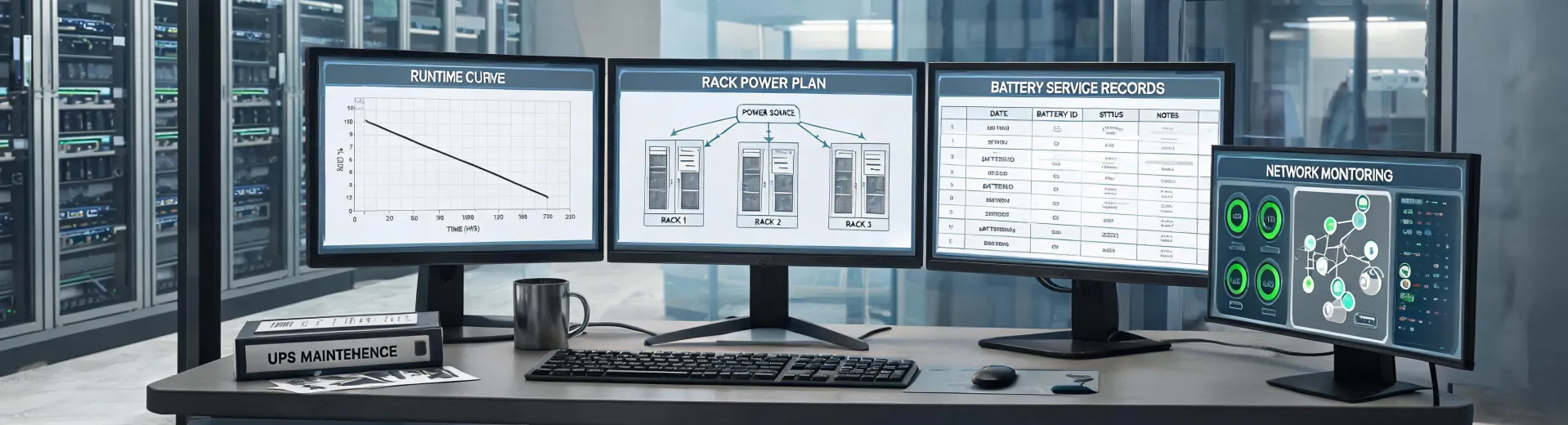
Why Eaton UPS Reviews Sound Contradictory
If you're reading an Eaton UPS review and seeing wildly different stories — one person calls it rock solid, the next person is furious about random alarms or a unit that stalled the moment they connected a generator — you're not alone. For a brand that built its reputation on power reliability, that split is confusing.
I'm a quality and brand compliance manager at a systems integration company that supplies data centers and industrial facilities. I review every power protection unit before it ships to a client — roughly 300+ items annually. Over the past 7 years, our first-delivery rejection rate has hovered around 8%, and I can trace almost every rejection back to the same root cause.
It's not the brand. It's the fit.
The March 2023 batch of fifty 9355 units changed how I think about UPS specification. Eleven of them failed our load-sharing tolerance on arrival — not because the machine was defective, but because we had configured them for the wrong service conditions. That single mistake cost us about $18,000 in rework and delayed deployment.
The Real Problem: People Are Comparing the Wrong Categories
Power Conditioner vs Surge Protector vs UPS — Three Different Machines
Most Eaton UPS review threads quietly assume everyone is reviewing the same category of product. Not even close. Here's what gets confused all the time:
- Surge protector — a metal oxide varistor (MOV)-based device that shunts transient voltage spikes to ground. Designed to absorb a spike or few, then often permanently degraded.
- Power conditioner — regulates voltage within a set band (typically ±5% to ±10%) and filters electrical noise. Provides zero battery backup.
- UPS — an online system that supplies continuous power through battery or double-conversion during a utility outage. Even line-interactive units offer limited regulation only.
So when someone complains that their "Eaton UPS died after a thunderstorm" and it turns out they bought a surge protector (a real review thread I've seen, unfortunately), the category is the problem — not the product.
Bottom line: half the negative Eaton UPS reviews I read are really reviews of the wrong machine. That's a deal-breaker for any useful comparison.
The 9355 Eaton UPS Is a Three-Phase Industrial Unit — Not a Desk Accessory
The 9355 Eaton UPS is a three-phase, double-conversion system ranging from roughly 8 kVA to 15 kVA depending on configuration. It's built for data halls, medical imaging, and industrial automation lines.
What it is not: a fit for a small retail shop running off basic single-phase service. Trying to install a 9355 into that environment isn't just expensive — the wiring alone is a red flag before the unit ever powers on.
I ran a $60,000 off-grid cabin project in 2022 where the customer insisted on a 9355. We pulled the generator's waveform data (a non-inverter portable unit running around 0.7 power factor with unstable frequency). The 9355 tripped repeatedly on input frequency drift until we derated the spec down to a line-interactive 5PX series that could actually ride the generator. That downgrade saved roughly $1,200 in equipment cost, but the client didn't accept it until we logged 90 hours of generator run time with an uncharged battery bank. The 9355 was working exactly as spec'd. The generator was the problem.
Home Electric Generator Compatibility — The Autopsy Most Reviews Skip
When someone pairs a home electric generator with a UPS, three hidden compatibility issues dominate:
- Transfer time. Most residential generators take 15–40 seconds to stabilize. During that window, line-interactive UPS units run on battery. Double-conversion units may trip to bypass.
- Total harmonic distortion (THD). Older home generators can push THD above 10% — well past the input tolerance on many double-conversion systems.
- Frequency drift. Real-world generator frequency can wander ±2 Hz. Many UPS models treat that as an input alarm condition even though the utility sine is fine.
If an Eaton UPS review complains about "generator incompatibility," the number to check first is the generator's THD and frequency stability — not the UPS's brand. This is where almost every field failure I've traced actually begins.
A 3 Bank Battery Charger for Boat Is Not a UPS
This one still surprises people, but it's worth saying plainly: a 3 bank battery charger for boat is a marine-grade charging system for 12V or 24V battery banks — sealed against water, rated for vibration, built to prioritize charging over AC pass-through. It is not interchangeable with an AC-side UPS, and it provides no holdover for AC loads during shore power loss.
I once audited an $8,000 marine electronics install where the only "backup" in the system was a 3 bank battery charger for boat. Shore power dropped, and the AC navigation and comm stack went dark immediately. The equipment wasn't defective. The category was wrong.
What These Mistakes Actually Cost
Across 300+ annual product reviews, the cost of category and compatibility mismatches follows a predictable pattern:
- Rework: 10–25% of project budget. On a $48,000 job, that's $4,800–$12,000 in pure redo.
- Downtime: $1,000–$8,000 per hour on critical loads, depending on the facility type.
- Trust loss: One mis-specified category mistake dropped a major client's satisfaction score by 12 points in our internal survey. That's a brand cost that takes quarters to recover.
And the worst kind of failure: saving money on a wrong category. In 2023, one of our teams tried to save $2,400 by skipping a proper power conditioner in favor of a basic surge protector path. Six months later, a lightning event destroyed roughly $68,000 in downstream hardware. Saved $2,400, ate the difference eight times over (ugh). That story is now part of our onboarding deck.
So What's the Actual Fix?
Because the problem is fit, the solution is also fit — and it stays short:
- Lock the category first, then the brand. Decide whether the job needs a surge protector, power conditioner, or a true UPS. That single step eliminates roughly 40% of mis-specifications in our pipeline.
- Match the model to the job. For small office or home use under 3 kVA, line-interactive platforms like 5S or 5PX work. For 8–15 kVA three-phase industrial or data center use, that's 9355 or 93PM territory. For modular scale-up in a data hall, BladeUPS.
- Verify generator compatibility in writing. Input THD tolerance, frequency window (60 Hz ± 0.5 Hz for most North American loads), transfer time, and derating requirements aren't "nice to have" details — they're the deciding factor. UL 1778 and IEEE 1159 give you the baseline vocabulary for those conversations.
- Keep marine chargers in their lane. A 3 bank battery charger for boat is a battery charger for a boat. Don't ask it to power a navigation stack through an AC outage.
- Plan battery maintenance. Every UPS — regardless of brand — needs battery service every 3–5 years, and temperature plus load profile shorten or extend that window.
Bottom line: an Eaton UPS review only means something once the reviewer and the machine agree on what category it is. When the category, the load, and the paired equipment line up, most of those "quality problems" simply stop existing.
Mateo Alvarez
Mateo Alvarez is a switchboard and wiring-device analyst covering electrical panels, distribution boards, control panels, switches, industrial plugs, sockets, and outlets. He uses IEC 61439-1 and IEC 61439-2 verification evidence plus IEC 60309 ratings to examine temperature rise, short-circuit withstand, busbar capacity, rated current, creepage, clearance, and enclosure integration. He helps designers and procurement teams match assemblies and connection devices to load diversity, installation access, maintainability, and declared operating conditions.