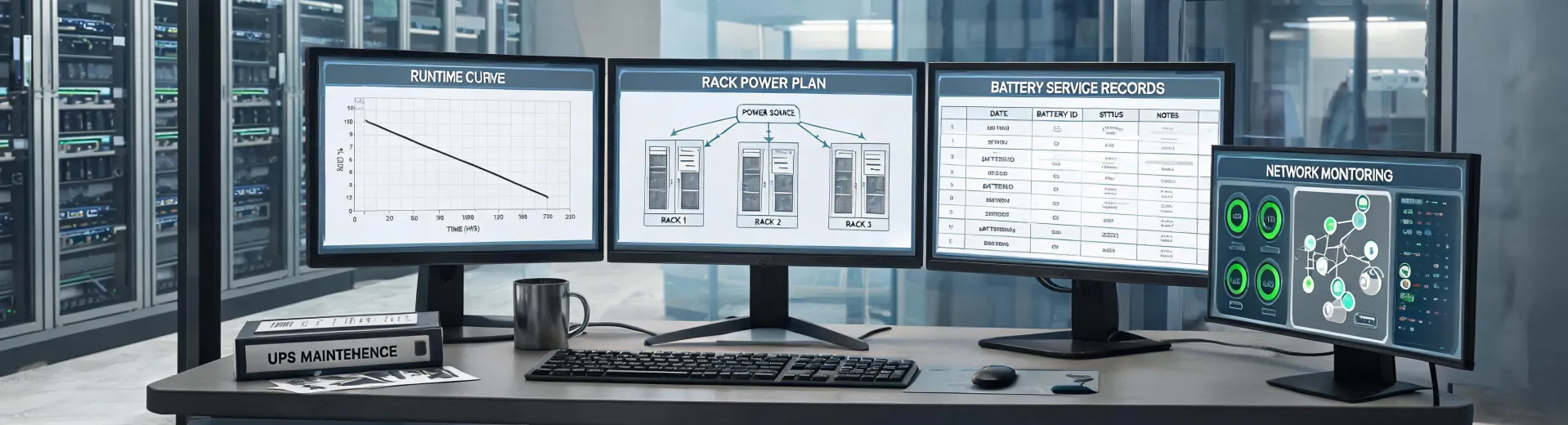
7:14 on a Tuesday
The call came in at 7:14 on a Tuesday morning in March 2024. I was still on my first coffee. The caller ID said River Bend Water Facility — a small municipal plant we'd serviced for years.
"Our main Danfoss VFD tripped overnight," the plant manager said. Voice tight. No small talk. "The line's been down since eleven last night. I need to know if it's still under warranty, and I need the password to unlock the parameter menu so my guy can check the settings."
I told him I'd have answers within the hour. Then I hung up and looked at the board. Three more calls had come in overnight, all flagged urgent.
That's when I knew the week was going to get ugly.
I coordinate emergency service calls for a small electrical and electronics repair shop. Five techs, two vans, and a lot of repeat customers who call us when something breaks at the worst possible moment. In my role, I've handled more than 200 rush jobs over the past four years. Same-day turnarounds for small industrial clients, overnight parts runs for RV owners, and one memorable night where I drove a replacement controller across two counties because a restaurant couldn't open without it.
You'd think I'd have the triage thing figured out.
I didn't.
The Danfoss VFD, the Warranty, and the Password That Wasn't Written Down
The Danfoss VFD wasn't just a repair ticket. It was the whole reason the plant was calling us instead of their regular maintenance contractor. The drive had tripped at 11 p.m. and nobody on-site could get past the parameter lock.
Here's what most people don't realize about a Danfoss VFD when it fails at 11 p.m.: the warranty status isn't a paperwork question. It's the difference between a $400 replacement and a $4,000 repair. It's also the difference between a plant manager who goes home that night and one who stays up explaining downtime to his board.
We pulled the drive's serial number and checked its Danfoss VFD warranty status against the official database. Still covered — barely. Two months from the cutoff.
The Danfoss VFD password was trickier. The plant's maintenance guy had already tried a few common defaults. No luck. I pulled up Danfoss's official VLT documentation, confirmed the parameter-access procedure, and walked him through it step by step. Turns out the drive had a custom password set during commissioning five years ago, and nobody had written it down.
We got it unlocked by mid-morning. Line was back up by 1 p.m.
I thought that was the crisis. I was wrong.
The 'Small' Calls I Kept Pushing Back
While we were sorting out the Danfoss VFD, three more calls stacked up. I'll be honest — I triaged them in the order they showed up on my screen, and at the time I didn't think twice about it.
Call number two was an RV owner, two days from a cross-country trip, whose Norcold RV refrigerator control panel had died. He'd already tried resetting the breaker and pulling the fuse. He needed help fast.
Call number three was a homeowner whose LG oven control panel had stopped responding the night before her daughter's birthday dinner. Calm on the phone, but I could hear the urgency underneath.
Call number four was — and I'm not making this up — a guy who wanted to know how does a solar generator work because he was shopping for one and wanted to know if it could run a small Danfoss VFD in a pinch. Not an emergency, but a good question, so I scheduled a callback.
Here's what I told myself: handle the plant first. The RV guy and the oven lady can wait a few hours. Their jobs are smaller, right?
That thinking nearly cost me two customers.
The Turn
By Wednesday afternoon the Danfoss VFD was running fine, and I still hadn't called the RV owner or the oven customer back. Both had called again.
The RV guy had left a message — frustrated but polite. "I get that you've got big clients," he said. "But I'm leaving Friday morning. If you can't help, just tell me so I can find someone else."
The oven lady had gone quiet. That was worse.
I called her back first. She'd already found a local repair guy — and paid a $150 diagnostic fee for the privilege. The LG oven control panel turned out to be a loose connector on the control board. A twenty-minute fix.
I should've caught that on Tuesday.
The RV owner was still flexible, thankfully. We diagnosed his Norcold RV refrigerator control panel on Thursday afternoon — failed control board — and overnighted the part. He left Friday morning with cold food and a working fridge. But I'd added 24 hours of unnecessary stress to his week because I'd let a "small" job sit at the bottom of my list.
When I compared how I handled the $4,000 industrial repair and how I handled the $180 RV job side by side — same week, same shop, same me — I finally understood something I should've known for years. "Small" doesn't mean "less important." It means "different stakes."
The plant manager was frustrated, sure. But he had a maintenance team, a backup plan, and a municipal budget that could absorb downtime. The RV owner had a trip he'd planned for six months. The oven lady had a birthday dinner she was hosting. Their stakes weren't smaller. They were more personal.
And I'd treated them like they were optional.
What I Got Wrong (And What We Changed)
We didn't have a formal triage process back then. Calls came in, I eyeballed them, and I prioritized based on gut feeling. That worked fine until it didn't. After that week, I built a simple intake checklist. Three questions for every caller:
Deadline. Consequence. Fallback. When does this actually need to be fixed? What happens if it slips 24 hours? And does the customer have another option if we can't deliver?
Turns out every emergency has a deadline. You just have to ask about it. The guy calling about a replacement control panel sometimes has more flexibility than the woman calling about a birthday dinner. You can't tell which is which from the caller ID.
(The third time a client told me "it's not urgent" and then called back four hours later in a panic, I finally created a written intake form. Should've done it after the first time. Actually — should've done it after that Tuesday.)
Here's the other thing I changed. We started documenting passwords, warranty status, and commissioning details in a shared handoff file — especially for industrial drives. If you service Danfoss VFD units with any regularity, this matters. I've watched three separate clients lose hours to a parameter password nobody wrote down. That's not a technical problem. That's a process problem.
The Solar Generator Question
I did eventually call back the guy who asked about the solar generator. We talked for twenty minutes — mostly about how solar generators store DC power in a battery bank, convert it through an inverter, and feed your appliances. He asked whether one could run a Danfoss VFD, and the honest answer was "maybe — depends on the drive's startup draw and the inverter's surge rating."
He didn't buy one. But he called me six weeks later when his shop needed a replacement drive controller. Small conversation, real lead.
That's the thing about small customers. When I was starting out at this shop, the vendors who treated my $150 orders seriously are the ones I still send $15,000 jobs to. The math works out. It just takes a couple of years to show up on the books.
What I'd Tell Anyone Handling Emergency Service
Ask about the deadline before you ask about the dollar amount. A $200 job with a 48-hour deadline matters more than a $5,000 job that can wait a week. I've got the checklist on my desk to prove it.
And the next time somebody calls about a Norcold RV refrigerator control panel or an LG oven control panel and tells you it's a "small" job — believe them about the size of the job, not the size of the stakes. Those aren't the same thing.
That Tuesday morning feels like a long time ago now. But I still keep the intake checklist right next to the phone. Some lessons stick.
Mateo Alvarez
Mateo Alvarez is a switchboard and wiring-device analyst covering electrical panels, distribution boards, control panels, switches, industrial plugs, sockets, and outlets. He uses IEC 61439-1 and IEC 61439-2 verification evidence plus IEC 60309 ratings to examine temperature rise, short-circuit withstand, busbar capacity, rated current, creepage, clearance, and enclosure integration. He helps designers and procurement teams match assemblies and connection devices to load diversity, installation access, maintainability, and declared operating conditions.